If Your Business Still Depends on You… It Isn’t Leveraged Yet
The Leveraged Engine Book
Learn how service businesses use past performance and government contracts to create revenue that compounds instead of resets.
Let’s cut to the chase here...
My $1 Trillion Dollar Reality Check...
My name is Melinda Colón.
For more than 20 years, I’ve helped firms secure contracts across federal, state, and local markets.
And today I’m going to show you something most firms do not understand about the $1 trillion public sector marketplace.
Over the next few minutes, I’m going to walk you through a structural pattern that determines whether your firm compounds leverage… or resets to neutral every procurement cycle.
Here’s what that means for you:

You can claim your share of a $1 trillion federal and SLED marketplace
You can build a firm that grows more stable and more valuable with each win instead of starting over
What You're About to Discover
Why most multi-million dollar firms are statistically capped at 22% win rates - and don’t realize the ceiling is structural (not market driven) (see pg. 25)
How “execution gravity” quietly FORCES the strong firms back into neutral competition every cycle (see pg. 22)
What actually changes when win probability jumps from 22% to 60% - and why volume becomes unnecessary when leverage is in place (see pg. 25)
The math behind “neutral competition” - and how reducing uncertainty improves probability (see pg. 26)
The one architectural shift that turns isolated public-sector wins into a continuous authority loop (worth tens of millions of executed properly) (see pg. 26)
More contracts doesn’t always improve firm profitability or revenue potential - compounding authority maximizes contract SIZE and revenue continuity (see pg. 29)
Why most firms think they have a revenue problem… when they actually have a leverage problem (see pg. 6)
The hidden reset cycle inside government contracts that quietly erodes authority (see pg. 9)
Why winning more bids does not automatically create stability (see pg. 12)
The structural mistake that forces strong companies to compete from neutral every few years (see pg. 15)
When to pursue new agencies… and when to expand inside existing relationships instead (see pg. 18)
The difference between growth that feels heavy and growth that compounds (see pg. 21)
How to structure your offer so momentum builds instead of resets (see pg. 24)
The two levers that dramatically reduce business development pressure (see pg. 27)
Why “more marketing” is usually the wrong solution in public sector growth (see pg. 30)
How to turn one contract into authority that multiplies future wins (see pg. 33)
The pattern elite firms follow to reduce bid volume while increasing hit rate (see pg. 36)
And how to build a public sector strategy that feeds itself (see pg. 39)

In my work, I’ve worked alongside hundreds of business owners pursuing federal and SLED contracts
And I’ve noticed something that almost no one says out loud.
Winning does not guarantee stability.
Consider this pattern:
100
FIRMS DECIDE TO PURSUE GOVERNMENT CONTRACTS
60
WILL WIN AT LEAST ONE CONTRACT
25
WILL WIN MULTIPLE CONTRACTS
<10
WILL BUILD LEVERAGE THAT COMPOUNDS
MOST
WILL EVENTUALLY FIND THEMSELVES COMPETING FROM NEUTRAL AGAIN
Why?
The most basic answer is this:
They run out of cash...
Cash is the lifeblood of any growing firm.
If you cannot cover payroll, taxes, overhead, and the cost of delivery, the entire machine stops. It does not matter how talented you are. It does not matter how strong your past performance is. It does not matter how many contracts you have won.
No cash. No business.
So firms keep selling just to survive.
They chase the next award to keep up with payroll.
They bid again to cover the last ramp-up.
They win… and immediately start over.
But let’s go deeper.
WHY are strong firms still running out of cash?
Why do some teams win contracts and still feel pressure every single quarter?
Why does growth feel heavier instead of lighter?
And why do a small number of firms seem to grow with less strain, fewer resets, and more stability?
On this page, I am going to show you why.
Contracts, Profit, and the $4.6 Billion Lesson
In 2022, a federal agency awarded over $4.6 billion across a long-term services program.
Several firms were selected.
Those firms did not just win a contract. They secured access for years.

But here is something most contractors learn the hard way:
Winning work does you no good if every award forces you to start from zero again.
New Relationships
Cost More
Than Growing Old Ones
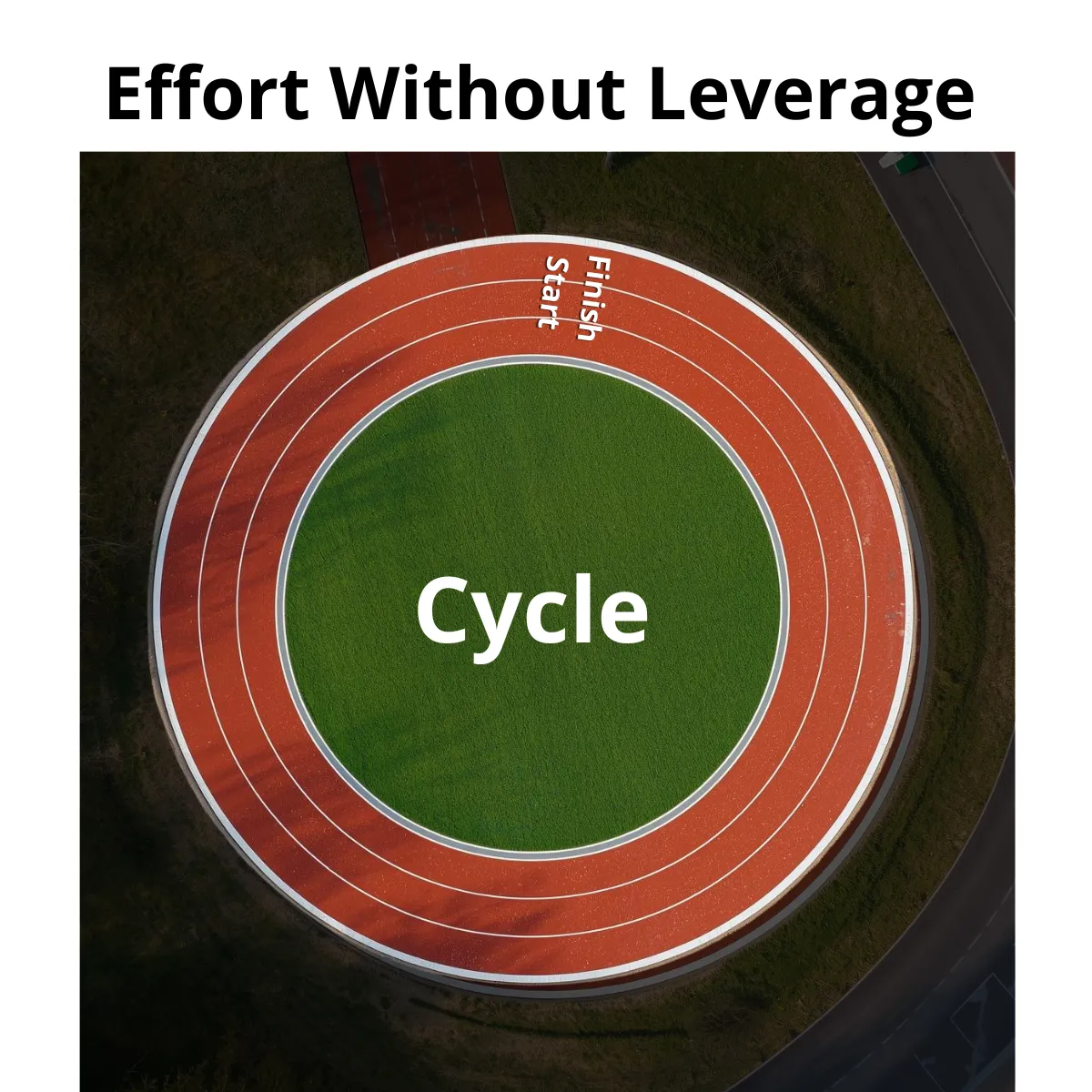
This is why capable firms struggle with stability. They spend months pursuing a contract. They win. They deliver. Then the cycle resets. New competition. New pricing pressure. New proof required.
Revenue comes in waves instead of layers.
Meanwhile, firms positioned inside long-term structures compound authority. Each win makes the next win easier. Each delivery deepens trust. Each expansion costs less to secure.
Same talent.
Different structure.
One builds momentum.
The other rebuilds momentum every year.
But…
Be Careful...
You’re reading this because you want to build a firm that is profitable, predictable, and sustainable.
The fastest way to destroy that in government contracting is to chase volume without leverage.
Before you decide to “just bid more,” let’s address a few common traps:
Winning a contract does not guarantee stability
Many firms win once… and then start from zero again.Hiring aggressively after one award can inflate overhead
Without compounding revenue, payroll becomes pressure.Chasing every opportunity weakens positioning
When you bid on everything, you signal authority in nothing.Relying on price to win will compress your margins
And once you compete on price, it is hard to escape it.
That’s where structural leverage comes in.
It allows you to take the best parts of growth and remove the constant reset cycle.
Let’s say your goal is to generate $5M per year in government revenue.
Compare these two approaches:
Option "A"
Win 20 isolated contracts
Each requiring full rebid effort
Each resetting authority
Each competing from neutral
Option "B"
Win 5 strategically aligned contracts
Each strengthening your positioning
Each expanding inside the agency
Each compounding past performance
Most firms choose Option A without realizing it.
Leveraged firms build Option B.
The difference is not effort.
It is architecture.
Building a SAFE & Profitable Firm

I’ve worked with companies that have secured billions in government contracts. Some of them grew quickly. A few of them grew intelligently. But the firms that built real wealth were not the ones with the best marketing. They were the ones with the strongest structure. Because in government contracting, growth without leverage becomes weight.
That’s where this guide comes in.
The Leveraged Engine is not about “winning more bids.” It is about building a revenue architecture that compounds instead of resets. Inside, I break down:
How to stop restarting from neutral every cycle
How to position your firm so authority builds over time
How to expand inside agencies instead of constantly chasing new ones
How to create revenue that strengthens your future bids
And I am not charging $25,000 for it. I am not asking you to join a mastermind. I am not selling you a certification. You can get this entire guide for $3.
Yes, three dollars. And you might be wondering why. Good. That means you are paying attention.
My Motives
I will make you a promise. This guide and training will help you more than most of the expensive programs being sold in this space. Not because others are bad people. But because most of them are teaching growth backwards. They focus on winning the next contract. I focus on building a firm that does not reset every cycle. The last thing you want is to build a company that depends on constant rebidding just to survive. You did not start your business to live inside proposal deadlines forever. You started it for reasons that probably look like this:
More time with your family
More stability in your income
More control over your future
The ability to build something that lasts
But what happens to many firms? Growth increases pressure. Teams expand. Expenses rise. And every award feels like a temporary victory. Eventually the business becomes exhausting. Not because you lack capability. Because the structure requires constant momentum just to stay afloat. I call this the “reset cycle.” It is when each contract win feels like starting over from neutral. And over time, leaders quietly begin wondering if the stress is worth it.
This guide exists to remove that question. Because if your firm is structured correctly, growth becomes lighter. More stable. More predictable. And far more enjoyable.
And when something is structured well, pays you properly, and compounds authority over time… Why would you ever want to stop?
Two Types of Leaders
This guide and training is written for two types of firm leaders:

Type 1
Established and successful, but tired of every new contract requiring the same effort, selling, and rebuilding from scratch.

Type 2
Growing or just entering the public sector, and determined to build leverage correctly the first time instead of learning the hard way.
“This reframed how I think about contract growth. It is not about chasing volume. It is about compounding authority.”
— Engineering Firm Owner, 8 Figures
“We stopped bidding everything and started structuring for expansion. It changed our trajectory.”
— Federal Contractor
This Is Not Just a Guide About Contracts.
It Is About Structural Authority.
Winning work is not the goal.
Compounding authority is the goal.
And authority changes the economics of your firm.
If you want to keep chasing the next opportunity, there are plenty of places to learn that.
But if you want to re-engineer your firm so that each win strengthens your position for the next five years…
This was written for you.
What Do I Get Out of This?

If any of the following sound like you, this was written for you.
You want to increase revenue without increasing chaos.
You are tired of feeling like every new contract resets the scoreboard.
You care about building something stable, not just impressive.
You want your growth to compound instead of restart every few years.
You are serious about playing the long game in public sector markets.
You do not want to rely on luck, referrals, or heroic effort forever.
You want leverage built into your business model, not added later.
You would rather build once, correctly, than rebuild every cycle.
This Book Is Only $3
This book is three dollars. There are no hidden fees, no subscriptions, and no continuity programs attached to it. It is a simple, one-time purchase.
My goal is straightforward. I want you to understand leverage at a structural level so that you can stop rebuilding authority from scratch every cycle.
If this book changes the way you think about contracts, positioning, and growth, then we can explore deeper work together later. Many of the seven- and eight-figure firms I have advised over the years began with a small decision like this. They studied the model, implemented it, and saw measurable results.
You are fully protected. If you read the book and decide it was not worth your time, you can email us and we will refund your three dollars. There will be no friction and no interrogation.
There are only two possible outcomes.
Either you discover a structural advantage that changes how you grow your firm and you are glad you invested three dollars.
Or you decide it is not for you and you receive your money back.
There is no real risk here. There is, however, real upside.
If this model clicks for you, you will never look at growth the same way again.
Still Not Convinced?
If you want reassurance before purchasing, you are welcome to reach out. We are not hiding behind a funnel.
Once your order is complete, the book will be delivered immediately. There is no waiting and no complicated process.
Just the model.
© 2025 GovScale Insider, LLC. All rights reserved.
This site is not a part of the Facebook™ website or Meta Platforms, Inc. Additionally, this site is NOT endorsed by Facebook™ in any way.
Disclaimer: Results shared in this video and on this page are not typical and are dependent on various factors including experience, effort, and market conditions. This is not legal or financial advice. Government contracts are awarded based on merit and qualification. Individual results may vary.
Privacy Policy | Terms of Service | Earnings Disclaimer